
The Offseason Golf Club Checkup: 4 Things Our Repair Bench Checks Every Fall
Oct 7th 2026
Picture a golfer who played his best golf in June. By September, his irons feel a little off. His wedge shots that used to check now release past the pin. His 8 iron and 9 iron seem to go about the same distance.
He blames his swing. He spends the fall grinding on the range.
His swing was fine. His clubs changed.
That's the part most golfers never consider. A season of rounds, range sessions, bunker shots, and wet grass wears on your equipment. It happens so slowly you never feel it. Then one day your clubs aren't the clubs you bought.
Fall is the best time to fix that. You're playing less. Nothing is on the line. And your clubs are ready on the first warm day in spring.
We asked the guys who fix clubs every day what they check first. Here's the list.
1. Grips first
Tony Buemi has spent 17 to 18 years in the golf business and runs club repair at our Florence store. Ask him the most common problem he sees, and the answer comes fast: worn grips.
Tony Frederick, store manager and fitter at our West Chester store, gave the same answer on a different day. "If you can't hold on to the club, it's going to be really hard to deliver it back consistently," he says.
The common rule of thumb is new grips about every 40 rounds, or once a year for most golfers. GOLF.com adds a detail most people miss: count every range session as a round. If you practice twice a week, your grips wear out a lot faster than your scorecard suggests.
Check yours now. Shine on the rubber, a slick feel, cracks, or cords breaking free all mean it's time. Eric Howard, store manager in Florence, suggests changing them all at once so every club feels the same.
At Golf Exchange, a regrip costs the price of the grip plus $4 per club to install. Our full breakdown is in How Often Should You Regrip Your Golf Clubs?
2. Loft and lie
This is the one that surprises people. Your irons can bend.
Most irons and wedges are made of steel soft enough to adjust. That's how a fitter bends them to your specs. It also means a season of impacts can nudge them out of spec.
Tony Buemi puts grips first and loft and lie second on his offseason list. In his experience, heavy practice and hitting off range mats add up, especially with forged irons and wedges. GOLF.com's equipment editors recommend checking at least once a season for the same reason.
We'll be honest about one thing. We couldn't find a published independent study that measures how fast lofts drift. What we can tell you is what we see on the loft and lie machine. Forged irons are the ones we most often find out of spec, and the changes are usually small. A degree here, a degree there.
But a degree of lie angle can start a straight swing off line. And a degree of loft on two clubs can close the gap between them. That's how the golfer in our story ended up with an 8 iron and 9 iron going the same distance.
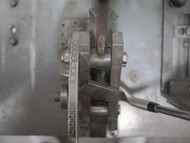
A loft and lie check measures every iron and wedge and bends them back to your specs. [ADD LOFT AND LIE PRICE] If you bought a used set, this is also when a retro fitting makes it truly yours. More on that in Are Used Golf Clubs Worth It?
3. Loose heads and ferrules
The epoxy that holds a clubhead on the shaft is strong. But it isn't forever.
Tony Buemi sees clubs come into the Florence shop with heads that have come loose. Age and thousands of impacts wear on that bond, and in his experience a summer of riding in a hot car trunk doesn't help.
Here's a quick test. Hold the club by the shaft and tap the head lightly on the ground. Listen for a rattle or a click. Twist the head gently. Look at the ferrule, the small plastic ring where the shaft meets the head. If it has slid up or cracked, something may have moved.
If anything feels off, bring it in. A re-epoxy is a small fix. A head flying off mid swing is not.
4. Grooves and wedges
This is where the numbers get eye opening.
Jeff Goff has worked in the golf business since 2001 and fits at our Lexington store. After grips, grooves are what he brings up for club care. "Keeping your grooves clean will be a huge thing for your irons and your wedges," Jeff says. You want them "sharp enough that you're getting some proper spin on the ball."
Start with dirt. Golf Digest tested it with a 60 degree wedge from 100 yards. With a clean face, shots averaged about 10,500 rpm of spin. With a dirty face, they averaged about 5,800. That's close to half the spin gone, and the fix is a groove brush that costs $5 to $10.
Now wear. Grooves wear down with use, especially from bunker shots and range balls. In robot testing reported by Golf Digest, a new wedge spun about 2,000 rpm more than a worn one from 90 yards. The worn wedge rolled out an extra 12 to 14 feet.
Titleist, which makes Vokey wedges, published its own robot data on this. A fresh wedge spun about 8,500 rpm. After the equivalent of 75 rounds, it dropped to about 7,400, and the ball rolled out 8 feet farther. That's a wedge maker's data, so take it with some salt. But it lines up with the independent tests and with what we see on our launch monitors.
Two tips. Clean your grooves after every shot, not just every round. And skip the groove sharpening tools. Golf Digest warns they can't match the edge shape the rules require and can make your wedge illegal. If your wedges have seen a few seasons, have us look at them. Sometimes the answer is a new wedge, not a new swing.
Store them right this winter
Cold won't hurt your clubs. Moisture is the bigger worry. Clean your clubs, let them dry fully, and keep the bag somewhere inside. Take off wet headcovers so nothing sits damp for months.
If you have a junior golfer, this is also the perfect time for their checkup. Jake Wright, assistant store manager in Lexington, calls a winter regrip a great project for junior and high school players. They start spring with fresh grips and full control of the clubface.
When you don't need a checkup
Not everyone needs all four checks. If you played a handful of rounds this year, rarely practiced, and your grips still feel tacky, you're probably fine. Clean the grooves, store the bag inside, and see us in spring.
The checkup matters most if you played or practiced a lot, hit off mats, spend time in bunkers, or haven't touched your clubs in a few years.
When a checkup turns into a fitting
Sometimes the checkup tells us your clubs aren't the problem. Your swing changed, or you never had the right specs to begin with. If that's you, Is a Golf Club Fitting Worth It? walks through what a fitting actually does.
Your offseason checklist
- Check every grip for shine, cracks, and slickness
- Get a loft and lie check if you played or practiced a lot
- Tap and twist each head, and look at the ferrules
- Scrub your grooves and check your wedges for wear
- Store the bag inside, dry, not in the car
Drop your clubs at any Golf Exchange store this offseason. Our team will look them over and tell you honestly what needs work and what doesn't.
Frequently asked questions
How often should I regrip my golf clubs?
About every 40 rounds, or once a year for most golfers. Count each range session as a round.
How often should I get my loft and lie checked?
At least once a season if you play or practice regularly. Forged irons and wedges move more easily than cast clubs.
Do dirty grooves really affect spin?
Yes. In a Golf Digest test, a dirty 60 degree wedge averaged about 5,800 rpm compared to about 10,500 rpm when clean.
When should I replace my wedges?
When the grooves are visibly worn or your shots stop checking. Robot testing reported by Golf Digest found a worn wedge spun about 2,000 rpm less than a new one from 90 yards.
How should I store golf clubs in the winter?
Clean and dry them, then keep the bag indoors. Cold won't hurt your clubs, but moisture can.