
How Often Should You Regrip Your Golf Clubs? The Part Everybody Sleeps On
Sep 9th 2026
Your grips are the only part of the club you touch. They're also the part you notice last.
Picture a golfer who plays every Saturday. His grips were new 2 years ago. They wore down so slowly he never noticed. What he did notice: the club felt harder to control. His hands got tired by the back nine. He started squeezing tighter, and his swing got tighter with it.
So he did what most golfers do. He went looking for a swing fix. A new tip, a training aid, a few more range sessions.
The fix was new grips.
That's the trap. Worn grips don't feel like a grip problem. They feel like a swing problem.
"Everybody sleeps on the grips," says Rob Jones, assistant manager at our Eastgate store. Here's how often to replace them, how to tell they're done, and how to pick your next set.
How often should you regrip your golf clubs?
About once a year if you play regularly. That's the rule our fitters give customers, and the data backs it up. Golf Pride puts the useful life of a set at roughly 40 rounds. PGA guidance lands in the same range, every 12 to 18 months for most golfers.
Play a few times a month from spring through fall? Once a year is your number. Play twice a week? Plan on new grips twice a season.
Here's a comparison that surprises people. Many tour players change their grips every 6 to 8 weeks. The players with the best hands in golf don't take chances with the only part of the club they touch.
Why worn grips cost you shots
A fresh grip is tacky. You can hold it lightly and it stays put. A worn grip is slick, so your hands squeeze harder without asking you first.
That extra squeeze runs up your forearms and into your swing, and tension is where smooth swings go to die. On mishits, a slick grip also lets the club twist in your hands.
Golf Pride tested this and found that worn, 2 year old grips can cost a golfer 3 to 4 shots per round. That's a grip maker's number, so weigh it that way. But even if new grips save you 1 shot, that's one of the cheapest shots you'll ever buy.
The grip check: 5 signs yours are done
You don't need a calendar if you know what to look for. Grab your 7 iron and run through these.
1. The shine
Look for slick or shiny spots, especially where your glove hand sits. Shine means the texture is gone.
2. The paint
The paint fill in the logo and lines fades as a grip wears. If you can barely read it, the grip is well past new.
3. The feel
Squeeze it. A fresh grip gives a little. A dead one feels hard, like plastic.
4. The cord
On corded grips, look for fraying or fuzz where your hands sit.
5. Your hands
Are you squeezing harder to keep the club from turning? Are your hands tired by the back nine? That's your grips talking.
Notice the last one isn't on the grip at all. It's in your hands. That's the sign most golfers miss, because it feels like a swing problem.
Replace them all at once
Our fitters are unanimous on this one. Change the whole set together, not one club at a time. Grips that go on together wear together, so every club feels the same in your hands. Swap just one and you're switching feel every time you pull a different club.
One more tip from the guys: a full regrip is a great winter project, especially for junior golfers. Fresh grips over the offseason, ready to go in spring.
How to pick your next grips
Grip choice is personal, and that's the honest answer. Feel and texture matter more than any spec sheet. Some players want tack, some want cord, some wear a glove and some don't. All of that changes what feels right.
A few starting points from our fitters. The Golf Pride Tour Velvet is the classic for a reason, and it's the baseline most golfers should try first. Wrap style grips and softer models like the CP2 line add comfort, which makes them popular with golfers who deal with sore hands or arthritis. Corded grips add traction for sweaty summer rounds.
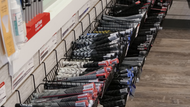
We keep a variety of grips in stock at every store, so you can put your hands on the options instead of guessing from a photo.
Does grip size matter?
More than most golfers realize. Grips come in standard, midsize, and oversize, and the right one depends on your hand size and how you hold the club.
A grip that's too small invites a harder squeeze and busy hands. Going up a size quiets the hands and lets you hold the club lighter. That's why midsize and oversize grips are the usual pick for golfers with arthritis or a death grip.
A quick test: take your normal grip. If the fingertips of your top hand dig into your palm, try a bigger size. Any of our stores can size you at the counter.
When new grips aren't the answer
We'll be straight with you here too.
If you only play a handful of rounds a year, you probably don't need new grips every spring. Go by the signs, not the calendar. If your grips still feel tacky and soft, keep playing them.
And new grips won't fix clubs that don't fit you. If your grips are fresh and your shots still miss in the same direction, the problem may be your lie angle, length, or shaft. That's what a fitting is for. Here's our fitters' honest answer on whether a club fitting is worth it.
Common questions about regripping
How often should you regrip golf clubs?
About once a year if you play regularly, or roughly every 40 rounds. If you play twice a week, plan on 2 sets a season.
How do I know my grips are worn?
Slick or shiny spots, faded paint fill, hard rubber, fraying cord, or the feeling that you have to squeeze harder to keep the club from turning in your hands.
Do new grips really lower scores?
Golf Pride's testing found worn grips can cost 3 to 4 shots a round, mostly through added hand tension and the club twisting on mishits.
What size grip do I need?
It depends on your hand size and how hard you squeeze. Midsize and oversize help golfers with bigger hands, arthritis, or a tight hold. Any of our stores can size you in a couple of minutes.
Should I replace one grip or all of them?
All of them. Grips that go on together wear together, so the whole bag keeps the same feel.
Before you blame your swing
Check your grips. It's one of the cheapest fixes in golf, and the one everybody sleeps on.
All 6 Golf Exchange locations have been named an America's Top 100 Clubfitter by Golf Digest, and every store keeps a variety of grips in stock. Stop in, hold a few, and find the one that feels right in your hands.
Shopping for more than grips? See how our fitters make used clubs yours, or find your store.